Insights & Trends
There Are No Mulligans in Brand Reputation: A Lesson in Creator Content + Brand Judgment
You Can Outsource the Creation. You Can’t Outsource the Judgment.
What the Good Good Golf controversy can teach brands about creator content approvals
Creator partnerships work because brands give up some control. They have to.
Creators know their audiences. They know the humor, references, formats and rhythms that work in their communities, and they know when a brand is trying too hard to sound like it belongs there. Find the right creator, give them a strong brief and room to work, and you can make something a brand would have a hard time creating on its own.
And that influence is real. Eighty-six percent of consumers say they make a purchase inspired by an influencer at least once a year, while nearly half say influencer content influences purchases at least monthly, according to Sprout Social.
When creator content can move people to act, what a brand approves matters. The trick is knowing where creative freedom ends and brand judgment begins.
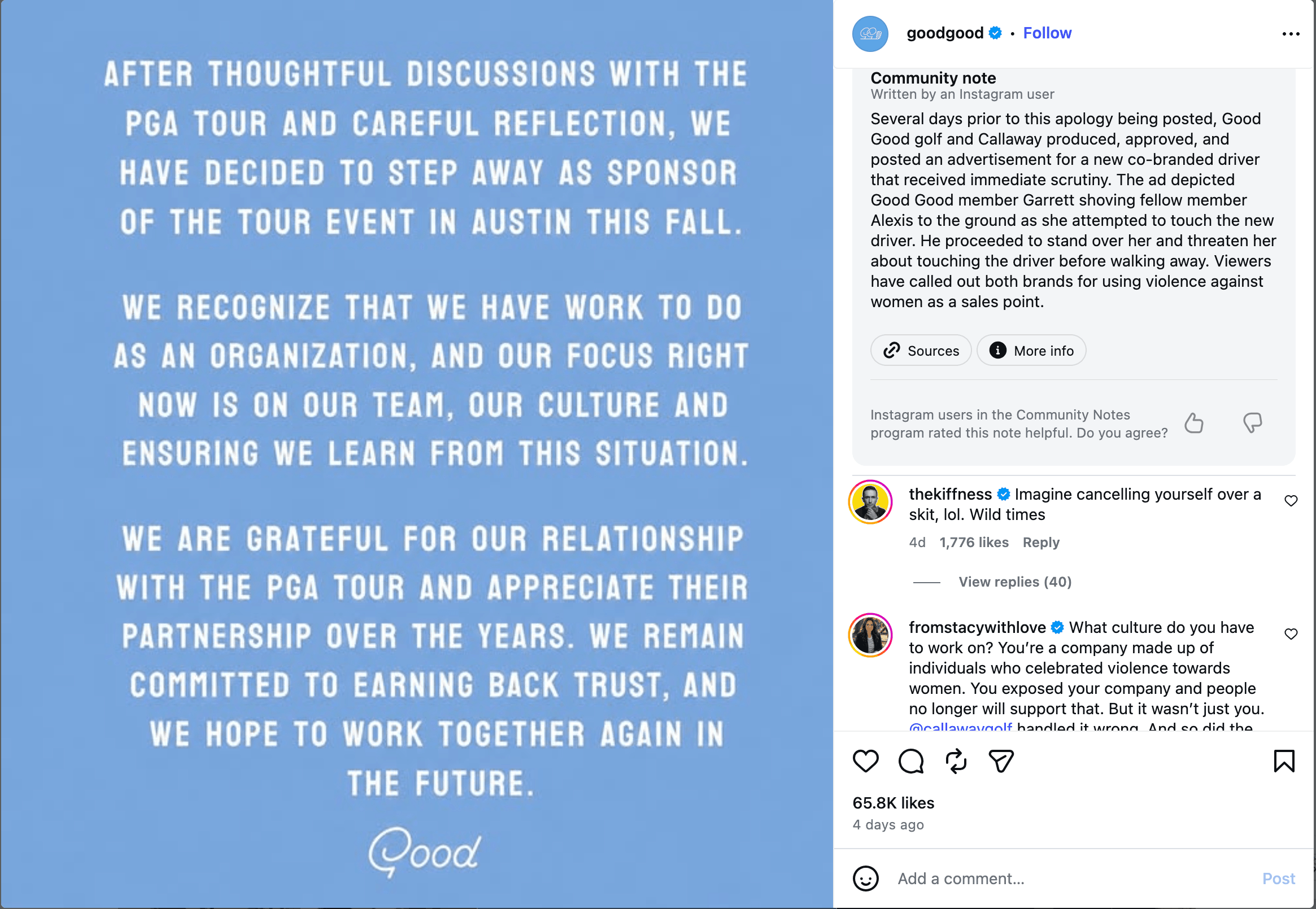
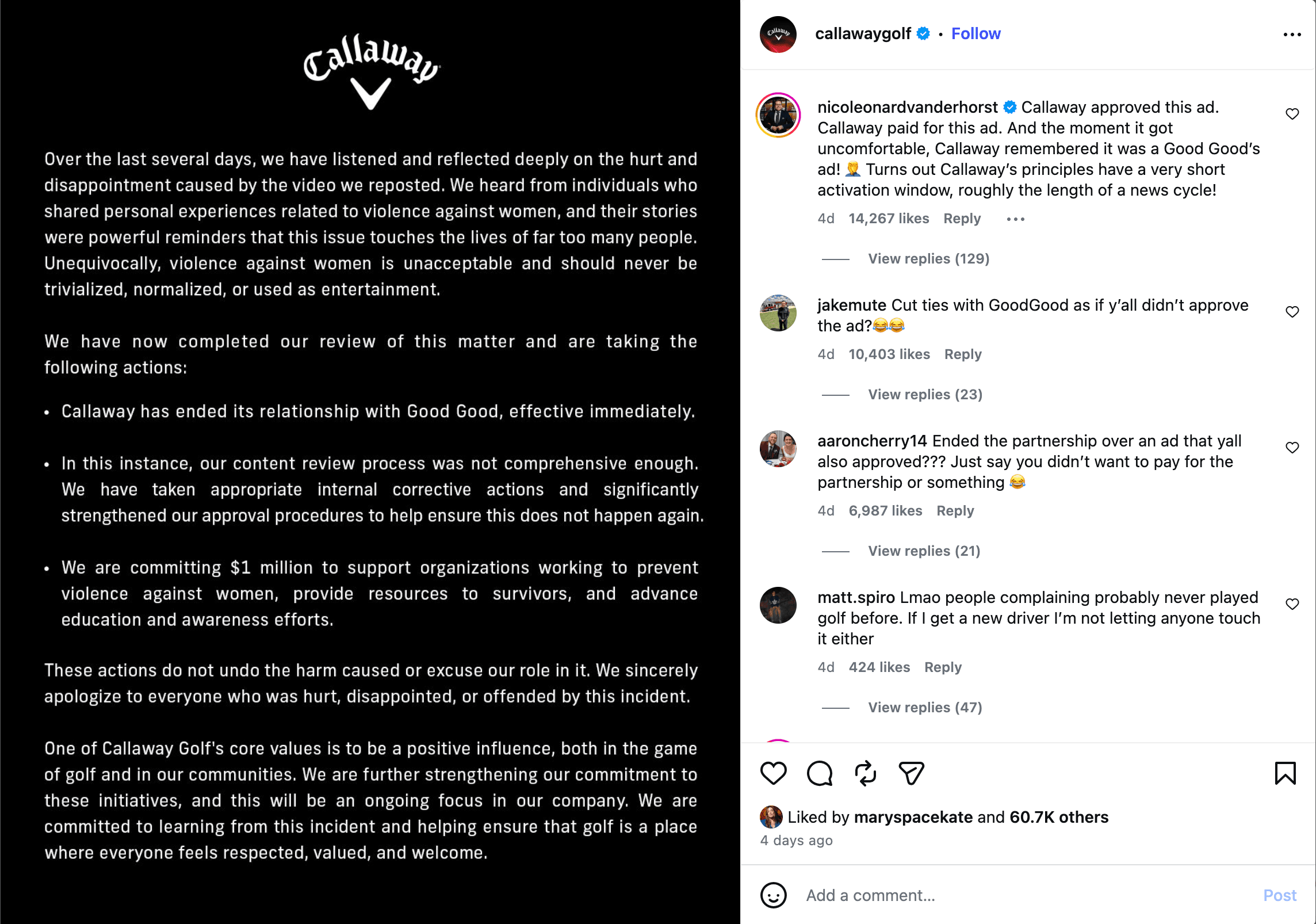
The recent fallout involving Good Good Golf and Callaway offers a pretty stark example. Good Good produced a promotional video for a co-branded Callaway x Good Good driver showing co-founder Garrett Clark shoving fellow creator Alexis Miestowski to the ground after she reached for the club. The video was removed following backlash. Callaway later confirmed that it had approved the content before publication and reposted it. CEO Chip Brewer said the approval should never have happened, and the company acknowledged that its review process had not been comprehensive enough.
For marketers, that detail changes the story.
This wasn’t unauthorized content that caught a brand by surprise. It came out of an established creator partnership and made it through brand approval. Somewhere between idea and publishing, the process failed.
Which raises a much more useful question than how the content got made: How did it get approved?
Approval should be more than checking the boxes.
Most brands with established creator programs have approval processes. There are briefs, contracts, claims reviews, disclosure requirements, brand guidelines, legal reviews and final signoffs.
Sometimes, a piece of content can clear all of them and still be a terrible idea.
“The goal isn’t to have more people approving every piece of content. It’s to make sure the right people are in the room when judgment matters. Creative, influencer, social and PR all see the work through a different lens. That’s the value of connected marketing.” – Laura Rinck, CEO, Rinck Advertising
Someone must look beyond whether the product is represented correctly, the disclosure is there, and the deliverables match the contract. Someone has to consider what the brand is actually endorsing by saying yes.
How will the idea land outside the creator’s most loyal audience? What happens without the context of an ongoing creator relationship? Does the humor work when the brand’s name is attached? Would customers, employees, or partners see it differently? What might PR see that the person managing the partnership doesn’t?
There isn’t a checkbox for all of that. It requires judgment, and judgment gets better when more than one kind of expertise informs it.
Good approval starts long before “final approval.”
Brands can head off a lot of problems before a creator ever sends over a draft.
Know who you’re partnering with. Understand their audience beyond the headline numbers. Spend time with their content. Know where they tend to push boundaries and whether those boundaries make sense for your brand. Set expectations around what requires review and who gets the final say.
Then give them room to create.
Good creator marketing shouldn’t feel as though six departments wrote it together. Over-engineer the process and you’ll approve all the personality right out of the work.
But freedom works better when everyone understands the guardrails.
The more provocative the idea, the more important it becomes to know when another set of eyes belongs on it.
Who’s in the room matters.
This is where creator approvals become a connected marketing issue.
The person managing the creator relationship knows the partner and their audience. Creative understands the idea and whether the execution works. Social knows the platform and how quickly context can disappear once content starts traveling. PR sees reputation, public interpretation and the headline nobody wants to wake up to. Strategy sees the larger brand and business context. Legal sees risks the rest of us aren’t trained to catch. Leadership may see implications that reach well beyond the campaign.
You don’t need all of those people approving every post.
You do need an approval process smart enough to know when you need them.
A routine product demonstration and a provocative comedy concept shouldn’t necessarily travel the same path to publication. Content involving violence, sex, politics, identity, health, safety or another sensitive subject deserves more scrutiny and, often, a broader group of people weighing in.
That requires clear decision rights and clear escalation points. It also requires a culture where someone can say, “I know this technically passed review, but I think someone else should see it,” without being treated as the person slowing everything down.
Different disciplines notice different things. That’s an advantage if your process lets them.
The audience sees one brand.
The public doesn’t know how your approval process works.
They don’t know whether creator partnerships sit with social or PR, which agency handled the work, what legal was asked to review or which executive gave the final signoff. And they’re certainly not going to study the org chart before deciding how they feel about what they just saw.
They know whose name is on it.
Callaway’s approval became a business problem quickly. The company ended its relationship with Good Good, which began in 2023. Good Good withdrew as title sponsor of a PGA Tour event. Callaway said it took internal corrective action, strengthened its approval procedures and committed $1 million to organizations working to prevent violence against women and support survivors.
One content approval ended up touching partnerships, sponsorships, retail, reputation, corporate leadership and philanthropy.
That’s a lot riding on “approved.”
One question worth adding to the process
No approval system will anticipate every possible reaction. But before content representing a brand goes live, there’s one question worth asking:
Would we be comfortable defending our decision to approve this publicly tomorrow?
The creator can explain what they intended. The contract can spell out what happens next. None of that changes the brand’s decision to put its name behind the work.
Creator partnerships need room for creativity, experimentation, and occasionally a little discomfort. Otherwise, brands might as well make the content themselves.
They also need people willing to exercise judgment.
You can outsource the creation, but you can’t outsource the judgment.
At Rinck, connected marketing isn’t about putting every discipline on every project. It’s knowing when the perspective of creative, PR, social, influencer, strategy or leadership will make the work smarter before it goes out the door.
However complicated the process is behind the scenes, the audience sees one brand.
FAQs
Does every influencer or creator post need PR review?
No. Routine creator content can follow a standard approval process without involving PR in every post. PR review becomes more valuable when content is provocative, culturally sensitive, likely to attract media attention or carries reputational implications beyond the campaign itself. Brands should establish in advance what kinds of content trigger additional review.
What types of creator content should trigger a higher level of approval?
Content involving violence, sex, politics, identity, health, safety, controversial humor or other sensitive subjects should generally receive additional scrutiny. Brands may also want to escalate content that departs significantly from the approved concept, references current events, makes unusual product claims or could affect employees, customers, partners or other stakeholders outside the creator’s primary audience.
Who should have final approval of influencer content?
The answer depends on the organization and the content. What matters is that final approval authority is clearly assigned before content is created. Brands should also establish who can stop publication or escalate a piece of content when a concern falls outside the normal approval process. For higher-risk content, final approval may need to move beyond the person who manages the creator relationship.
Should brands approve the creator’s concept or only the final content?
For campaigns where the concept itself could create brand or reputational risk, brands should review the concept before production and execution before publication. Concept approval can identify problems before significant time and money are invested, while final approval confirms that the execution still reflects what the brand agreed to.
What should a brand do if someone reviewing creator content feels uncomfortable with it?
Treat the concern as a reason for another look, not an inconvenience to the process. The reviewer should be able to pause publication and bring in the appropriate additional perspective, whether that is PR, legal, creative, strategy or leadership. A good escalation process gives people permission to raise concerns even when they cannot immediately articulate exactly what is wrong.
How can brands give creators creative freedom without losing control?
Set the boundaries before the creative work begins. A strong brief should make the brand’s non-negotiables clear while leaving room for the creator’s voice, humor and knowledge of their audience. Clear approval rights and escalation criteria allow brands to give creators more freedom because everyone understands where that freedom ends.
Should a brand repost creator content without reviewing it again?
Not automatically. Reposting puts the content directly into the brand’s own channels and may expose it to a different and broader audience than the creator’s original following. Brands should consider whether content that works in the creator’s context also makes sense when it appears under the brand’s name and without the same audience context.

Janelle LoSciutoSenior Public Relations Manager